
Free quote
Call or text a photo
Colby answers within the hour, 6:30 am to 7:00 pm. After hours for emergencies.
(904) 528-1543 Text a photo Or request a quote onlineNortheast Florida gets its rain fast and hard, the lots are flat, and half of the newer subdivisions were graded once by the builder and never again. The result is water that stands where it lands. MacGregor Sprinkler installs the French drains, catch basins and downspout systems that collect it and carry it to the street, a swale or a dry well, and because irrigation and drainage share the same trenches, the sprinkler lines are protected or re-routed in the same job instead of cut by somebody else’s crew.
What this covers
- French drains
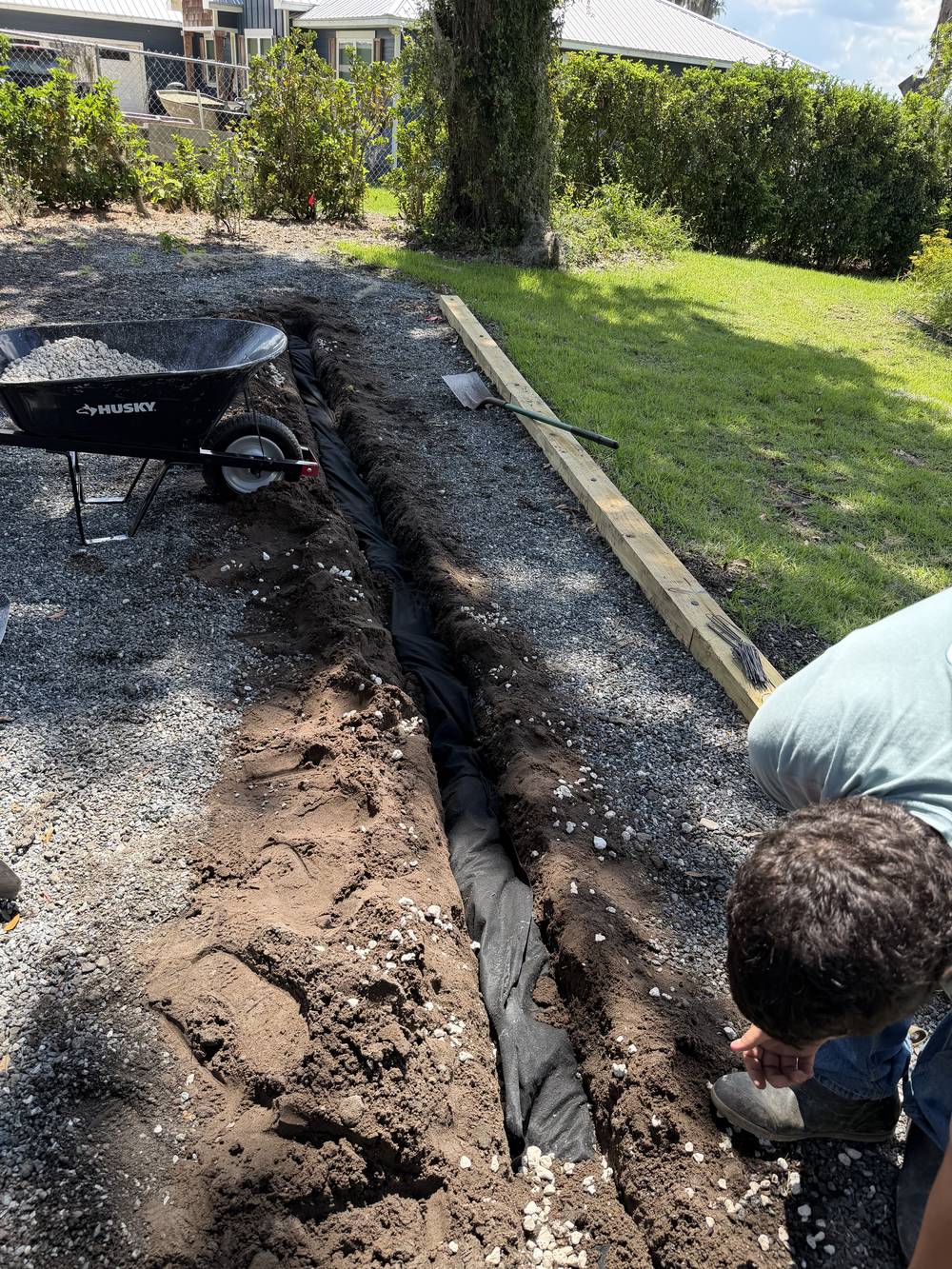
Perforated pipe in a gravel-filled, fabric-lined trench, pitched to fall, along the wet edge of a lawn or the foundation.
- Catch basins and channel drains
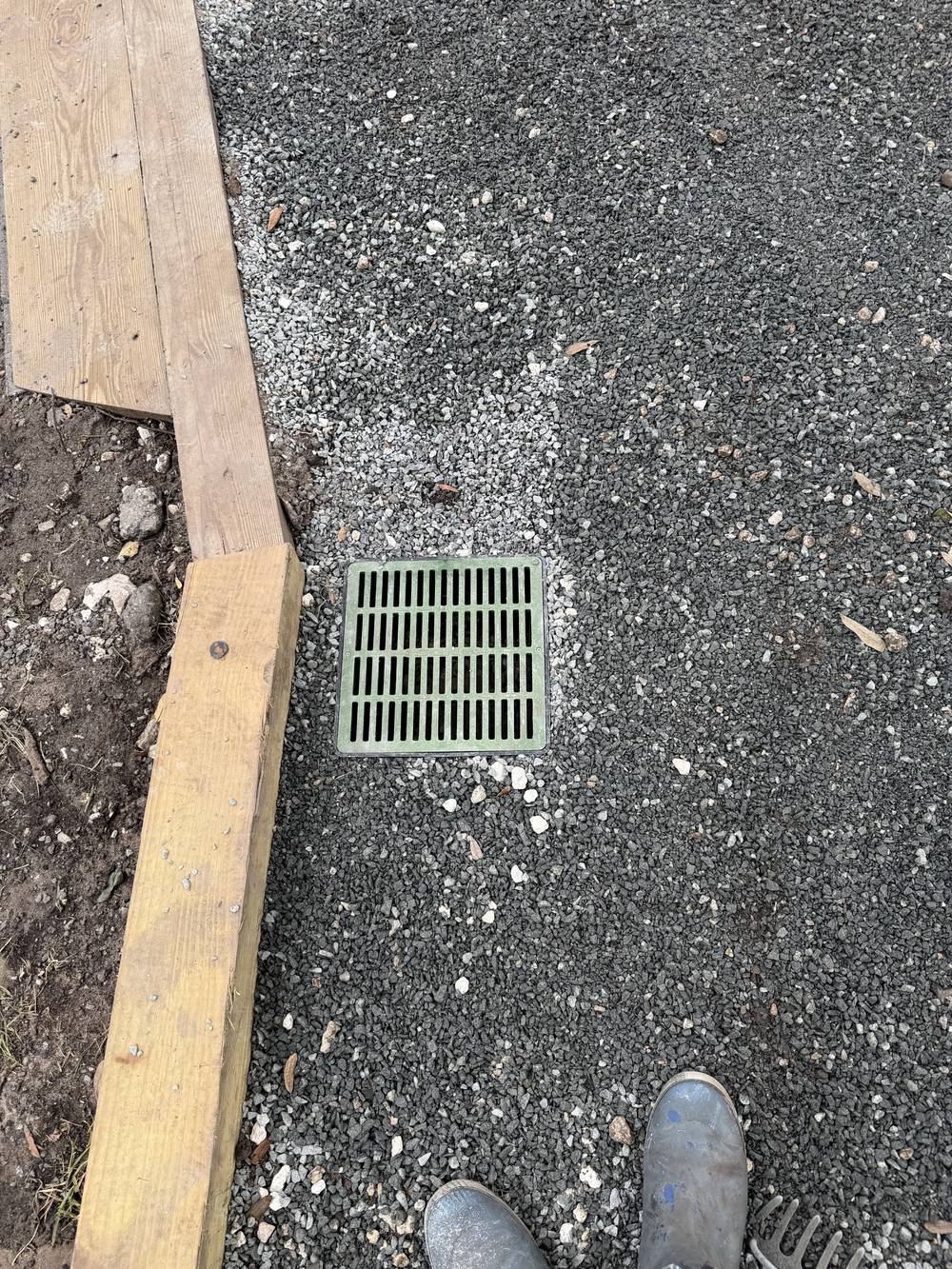
Grated basins at the low spot, channel drains along pool decks and driveways, piped to a discharge point.
- Downspout tie-ins
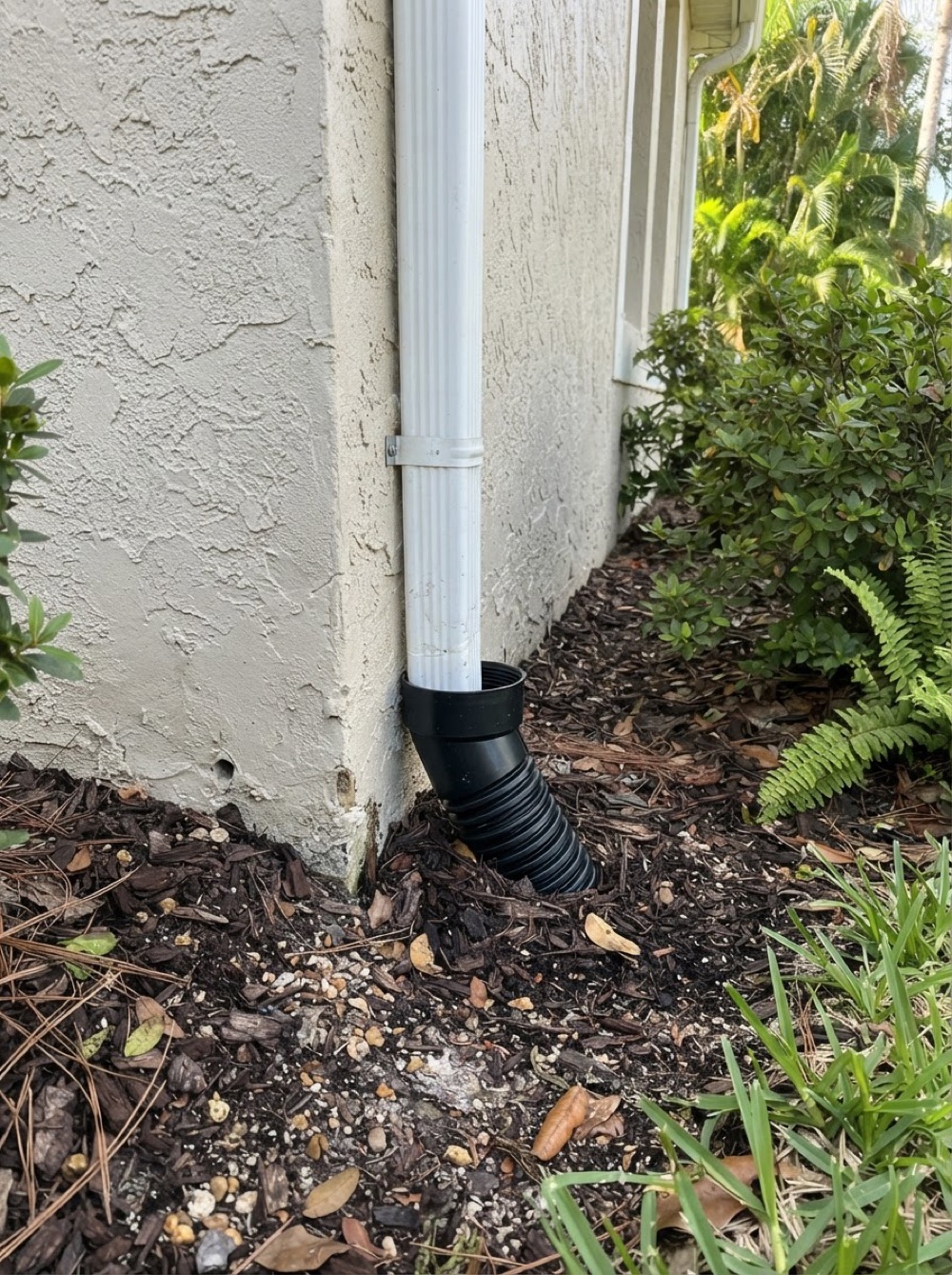
Gutters that dump against the house piped underground and away from the slab instead of splashing on it.
- Pop-up emitters and dry wells
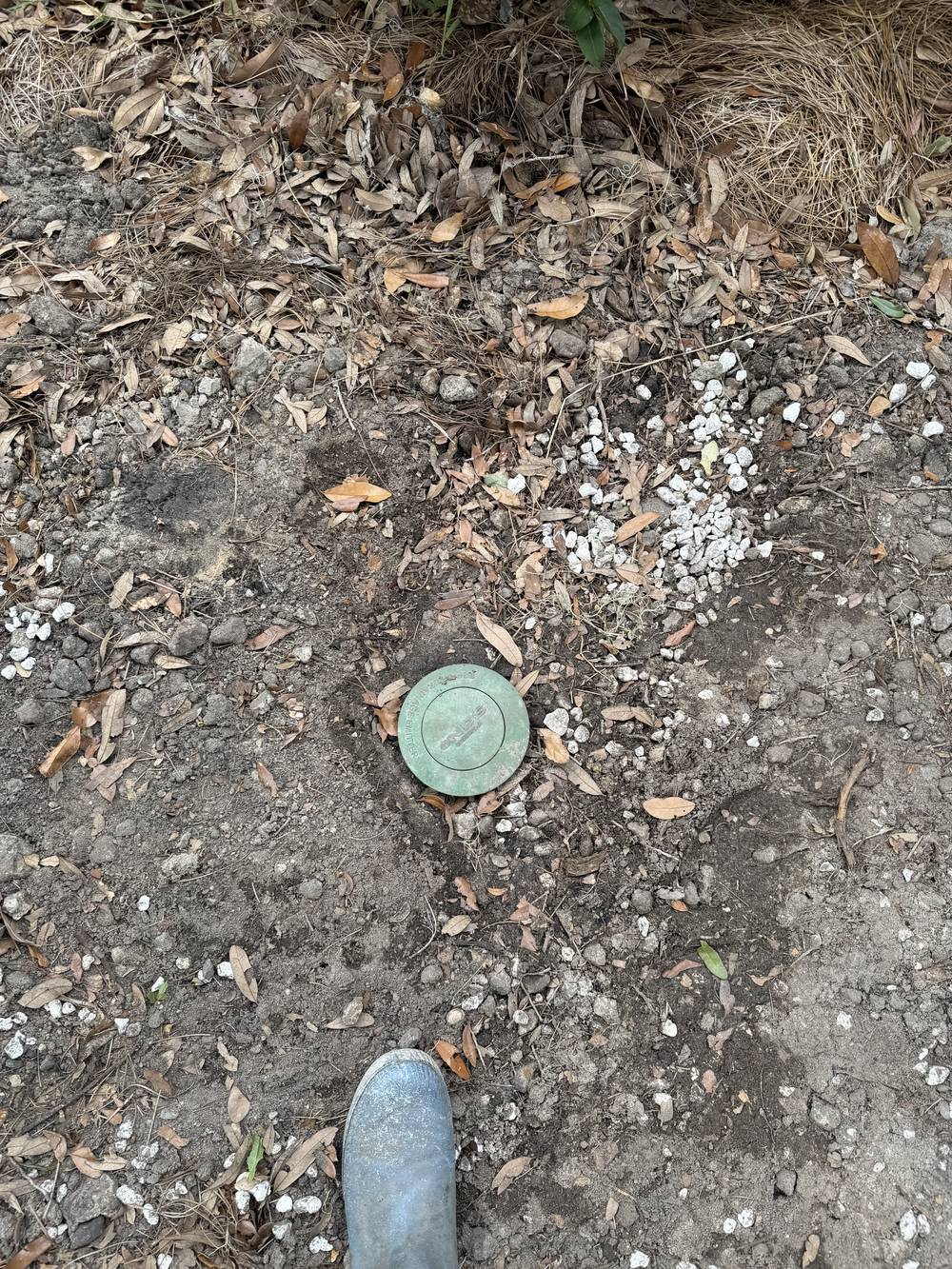
Discharge points that release collected water at the curb or into a gravel pit when there is no lower ground to run to.
- Regrading and swales
Where the fix is shaping the ground rather than piping it, a shallow swale that moves water between houses to the street.
- Irrigation protected
Sprinkler lines in the path of a trench are located first and re-routed rather than discovered with the trencher.
Where the water is coming from
Before anything is dug, Colby watches where the water arrives and where it wants to leave. A soggy side yard is usually two roofs’ worth of downspouts landing in a ten-foot strip. A dead patch in the back is often a low spot with a hardpan layer beneath it. Sometimes it is the irrigation itself, a leaking lateral keeping the ground saturated between rains. The fix depends on which one it is, and the quote says which one it is.
How a French drain is built
A trench is dug to fall consistently toward the discharge point, usually a couple of inches every ten feet. It is lined with filter fabric, bedded with washed gravel, and perforated pipe is laid with the holes down. More gravel, the fabric is wrapped closed, and the trench is topped with soil and sod or left as a gravel strip. Done this way it keeps working; done without fabric it silts up in a couple of years.
What drainage cannot do
It cannot make water run uphill and it cannot promise a dry yard in a tropical storm. If there is no lower ground within reach, the options are a dry well, a pump or living with a slower drain-down. Colby will tell you which situation you are in before you spend money on the wrong one.
Questions about drainage & french drains
How long does a French drain take?
Most residential runs are a one- to two-day job depending on length, depth and how many downspouts tie in. The quote gives a date and a duration.
Will you tear up my sprinklers?
No. Locating the irrigation lines is the first step, and any that cross the trench are re-routed as part of the work. That is the advantage of one contractor doing both.
Do I need a permit?
Typically not for a residential yard drain that discharges on your own property or to the curb, but rules differ by county and HOA. Anything that changes flow toward a neighbor needs care, and Colby will say so.
Can you fix the grading instead of installing pipe?
Sometimes, and it is cheaper when it works. A shallow swale between houses or a regraded bed against the foundation can be all a lot needs.
Sprinkler acting up? Call, or text a photo.
Free quotes across Clay, Duval, St. Johns and Nassau counties. Colby answers within the hour, gives you a firm date, and prices the job, not the clock.
Licensed & insured · Middleburg, FL · Owner-operated since 2025